There's a treatment on our list that arrives already wearing a nickname somebody else gave it, and that nickname is doing it no favours whatsoever. If the words vampire facial have quietly put you off something you were otherwise curious about, here's the name taken apart, piece by piece.
Why it's called the vampire facial
Start with the naming, because that's where all the trouble comes from.
Nicknames are never handed out by the people doing the work. They're handed out by whoever happened to be watching, and a watcher will always reach for the one detail that makes the best sentence.
Think about how a dish ends up called toad in the hole. Nobody in the kitchen decided on that. Somebody looked at what came out of the oven, saw shapes rising out of the batter, said the funniest thing available, and the name has outlived everybody who was standing there. There is no toad. There was never going to be a toad. The name was made entirely out of the one thing about the dish that was worth pointing at.
The vampire facial got its name in exactly that way. Somebody heard the words your own blood and reached for the most theatrical word in the language, and honestly, who could blame them. It's a wonderful name. It's very likely the reason you know this treatment exists at all, and we'd never pretend to be above it.
Its proper name is platelet-rich plasma, PRP for short, which is a great deal more accurate and a great deal less likely to get repeated at a dinner table.
The one thing the name gets backwards
Here's the part worth having, and it's the whole reason we can meet the nickname with a smile rather than a wince.
A vampire takes blood away and keeps it. That's the entire job description, and it's the only thing anybody has ever asked of one.
This is the opposite arrangement. A small sample of your blood is taken, and the best of it goes straight back into you. Out of your arm and into your face, all within the same appointment, and you are the one who keeps it. Giving blood back is a rather generous thing for a vampire to be accused of.
So the word is right about the ingredient and completely wrong about the direction. Once you can see that, the whole thing stops sounding like a late-night film and starts sounding like what it is.
What actually happens at a PRP facial
Three things happen, and they happen in this order.
First, a small sample of your blood is taken, and the platelet-rich plasma is separated from it. Both halves of that name are worth translating on the spot. Plasma is the liquid part of blood, the part that carries everything else along. Platelet-rich means the platelets have been gathered into it, so what ends up in the syringe is the part of your blood with the most platelets in it. And separating is exactly what it sounds like: one part taken out of the rest. Nothing is added, and nothing arrives from anywhere else.
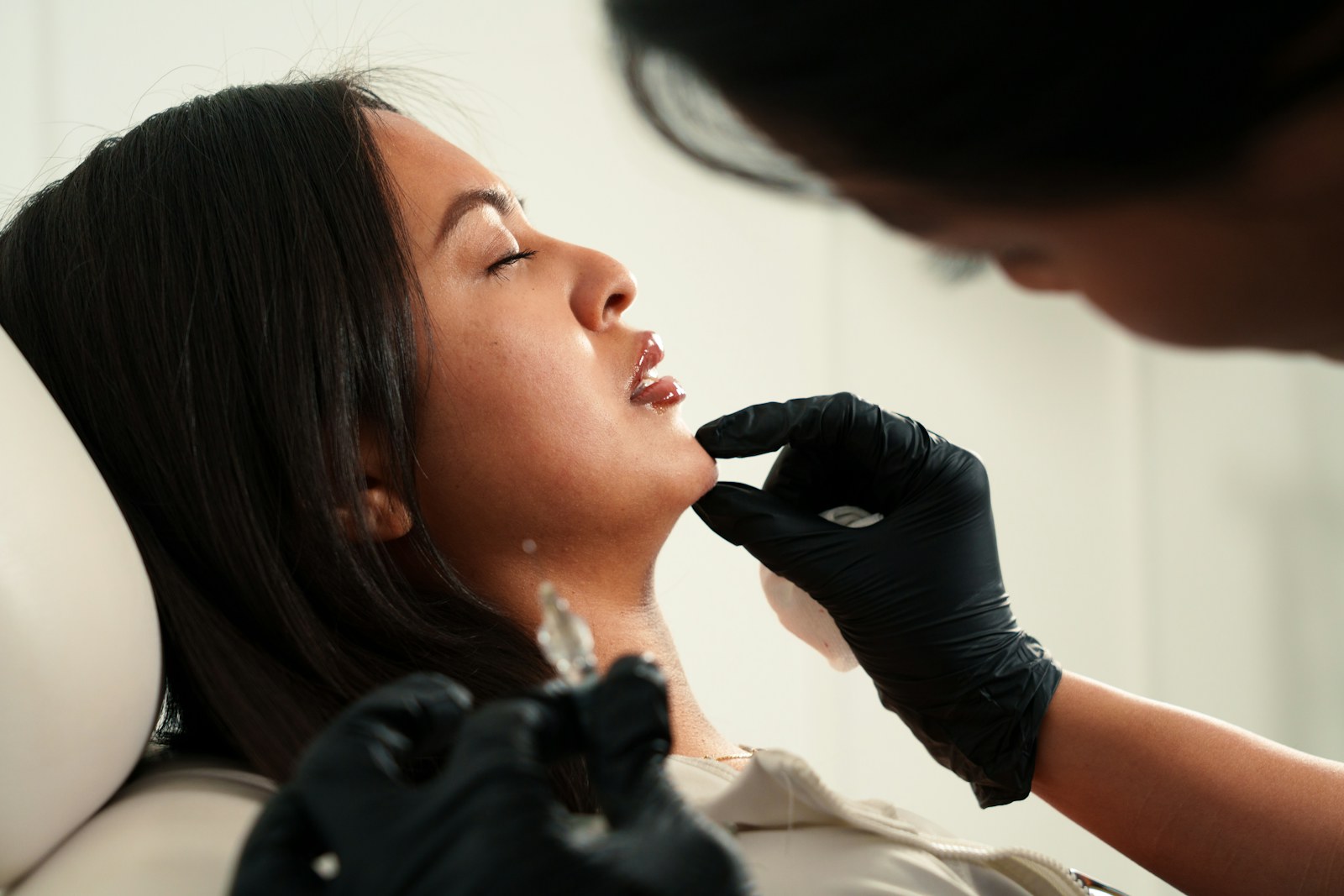
Second, that plasma is re-introduced into your skin through micro-injections. Micro is doing real work in that word, and so is the plural: these are fine injections spread across the area being treated, rather than a single injection into one spot. If it's hair we're treating rather than skin, the same injections go into the scalp instead.
Third, and this one happens after you've gone home and forgotten about it, the growth factors get to work below the surface. Growth factors are the repair messages your platelets carry. Results build as new collagen forms, or as follicles strengthen. New collagen is what microneedling asks your skin for as well, though it gets there by an entirely different route.
That's the whole of it. Whatever the name had you picturing, those three steps are genuinely the list.
Why it has to be your own blood
Because of what platelets are for.
Platelets are the blood cells that manage healing. Wherever your body sends them, those repair messages go too, and skin reads them whether or not there is anything wrong with it. That's the whole reason in one breath, and the longer version already has a home: what those growth factors set off, and why it behaves nothing like a filler is the piece to read if that's what has your attention.
What's worth adding here is the thing the nickname hides completely. Nothing is brought in from outside. There is no product, no gel, no substance chosen off a shelf and introduced to your face for the first time. The entire treatment is a rearrangement of something that was already in you this morning, which is about as far from gothic as a treatment can reasonably get.
What a vampire facial genuinely does for your skin
Now the thing you actually came for, which is what changes.
What changes is the condition of your skin. Dull skin sits at the top of the list. Fine lines and wrinkles soften. Texture and tone improve, because your skin has made new collagen, and collagen is the protein that holds skin firm. Sagging facial skin is on the list too, and so are dark circles and under-eye puffiness, which are rarely what brings anybody in.
There's a reason so much of that list sits together. Dullness, fine lines, rough texture and slackness are the same complaint wearing different clothes: skin holding less structure than it used to hold. The treatment doesn't chase them one at a time. It asks your skin to build the structure again, and they improve together when your skin does.
Why the word facial undersells it
Which brings us to the second word in the nickname, and it's the one that quietly costs you the most, because it hides fully half of what this treatment does.
Facial suggests something that happens to your face and stops politely at your jaw. This doesn't. The same treatment goes to the neck, the jawline, the chest and neckline, the hands and arms, and the knees as well.
Then there's the part hardly anybody arrives knowing about, and it has nothing to do with skin at all. The same platelets treat thinning hair. Those growth factors stimulate struggling follicles towards fuller, thicker growth, which is why platelet-rich plasma is used for male and female pattern hair loss, for alopecia and for hormonal thinning, with the injections going into the scalp rather than the face.
So the nickname promises you a face, and the treatment covers rather more ground than that. It's a strange fate, being undersold by your own name.
If it's the blood that's putting you off
Let's take that seriously for a moment, because plenty of people are entirely happy with the idea right up until they picture the first step of it.
Here's the honest size of that step. What the appointment asks of you is a small sample of your blood, taken the ordinary way a blood sample is taken. That's it, and it's the whole of what you've been flinching at. It's the same few minutes any blood test takes, and no more of you than that.
The name is what has made it feel bigger. Vampire is a word about quantity and theatre, and neither of those is being asked for here. A small sample is a small sample, whatever the internet has decided to call it.
What we won't do from a page is tell you how any of it will feel for you, because that's a sentence about one particular person and you haven't been in front of us yet. We'll talk you through every step of it at your consultation instead, before a single thing is agreed, and tell you plainly whether this is the treatment your skin is actually asking for.
Who tends to choose it
Three sorts of people tend to end up here, and there's a good chance you'll spot yourself in one of them.
The first is the group this whole article was written for: people who liked the sound of the treatment and were only ever stuck on the word. Once the name stops doing the talking, the decision turns out to be a much easier one than it looked.
The second is anyone who turns out to want both of the jobs it does. Skin that has lost its brightness and hair that has started thinning are two quite separate worries, and it's a rare thing indeed to find both of them answered by the same treatment.
The third is our favourite, and it's the people who read ingredient lists. They want to know what is actually going into them before they'll discuss anything else, and they're quite right to want that. Here the answer is the shortest one we ever get to give, and every word of it belongs to them already.
Come and ask about the part the name left out
If the nickname is the only thing that has been stopping you, bring the question in and let's settle it. Arrange your consultation, tell us what's been bothering you about your skin or your hair, and we'll tell you honestly whether platelet-rich plasma is the answer for it, and what to do instead if it isn't.
Every treatment at Broadway Retreat is delivered by experienced medical professionals at our CQC-registered clinic on Broadway in Manchester, and nothing goes ahead until you've decided. The platelet-rich plasma treatment page has the fuller picture if you'd like to read that first.
Whatever else you might want to say about vampires, not one of them ever gave anything back.